
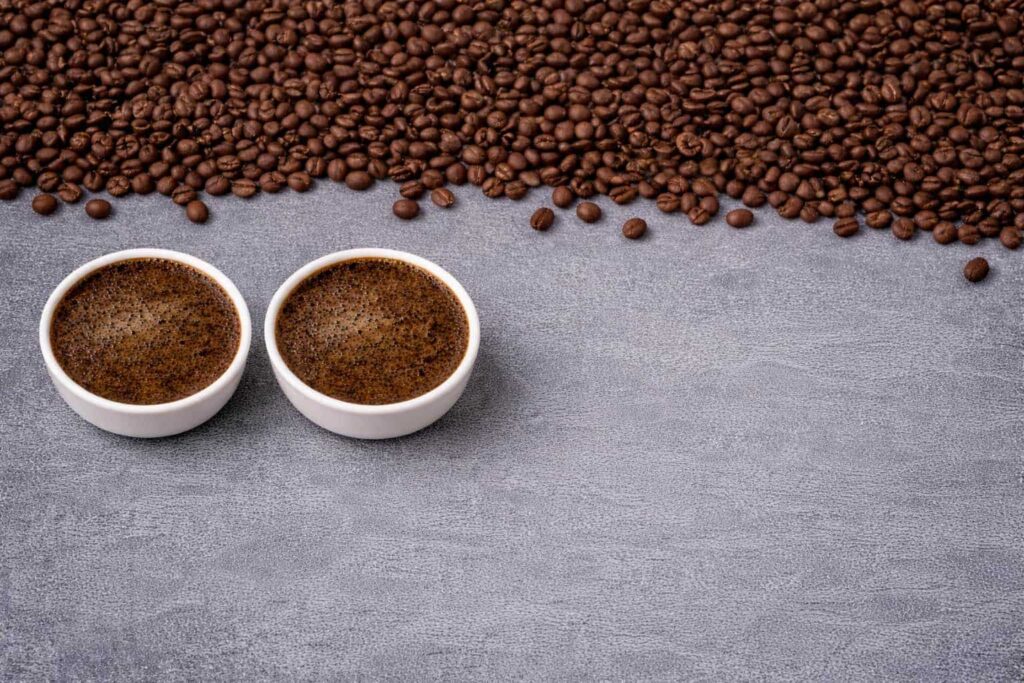
New Year, New Questions
Specialty coffee is evolving fast — faster than trend cycles, processing methods, and high-concept café menus can keep up with. Each year, our tasting reports are our way of pausing the noise and asking: What’s actually happening in the cup? Not what’s promised, not what’s marketed — what’s there.
Roasted coffee beans. Courtesy of Sergey Kotenev.
Throughout 2026, we’ll explore regions and roast styles, experimental fermentations, the mysterious world of decaf, the taboo of dark roasts, and the shifting idea of value in specialty coffee. These reports are not predictions; they are fieldwork. We taste blind, we compare impressions, and we let the coffees speak.
Here’s what we plan to investigate this year.
Pacific Northwest (February–March)

Coava Coffee Roasters in Portland, Oregon.Courtesy of Sean Benesh.
This report examines whether the Pacific Northwest — long considered the spiritual home of U.S. specialty coffee — still has a definable regional identity in the cup. We’ll source coffees from roasters in Washington, Oregon, Idaho, Alaska, and British Columbia, blind-taste them, and look for common threads. Do we still find the deep, classic profiles that shaped early specialty culture, or has the region splintered into divergent styles marked by experimental processing, lighter roasting, and global sourcing influences? This report asks whether “Pacific Northwest coffee” is still a unified idea and whether the region is still leading the pack in shaping coffee culture.
Decaffeinated Coffees (April–May)

Pour-over coffee. Courtesy of Sean Benesh.
Decaffeinated coffee is no longer a compromise for those who can’t have/don’t want caffeine. For many roasters, it has become an intentional offering that demands quality in both green selection and processing. This report evaluates the state of premium decaf as it stands in 2026, comparing Swiss Water, CO₂, ethyl acetate, and other methods across origins, profiles, and roast styles. We’ll consider cup integrity, transparency around decaffeination, and overall performance in the cup. The goal is to determine not whether decaf can be good, but how often it actually rises to specialty standards — and where the innovation is happening. We might even taste a few supermarket decafs as points of comparison.
Darker Roasted Coffees — At or Into Second Crack (June–July)

Dark-roasted coffee beans. Courtesy of Tyke Jones.
Dark roasts, once dismissed by many in specialty circles, are quietly returning in more intentional forms that aim for richness without burnt aromas and flavors and structure without bitterness. This report focuses on coffees taken to the threshold of second crack or slightly beyond, evaluating how well they maintain sweetness, balance, and varietal character at deeper roast levels. We’ll investigate whether dark roasting can serve as a stylistic choice that highlights certain coffees rather than masking flaws — and identify which roasters are elevating the category. And again, there might be some supermarket options out there that highlight these distinctions in comparison.
Value Coffees Under $19/12 oz. (August–September)

Neon coffee sign. Courtesy of Laura Filip.
As the cost of living rises, affordability has become a defining question for many coffee drinkers. This report looks at coffees priced under $19 per 12-ounce bag and asks what “value” truly means today: Is it merely a low price, or is it respectable cup quality relative to cost? The goal isn’t to lower the bar but to find roasters demonstrating that excellent coffee doesn’t have to be prohibitively expensive, while still honoring a supply chain in which farmers can thrive — because we know we can find coffees online at supermarket chains that don’t participate in this ethos, but that’s not what we’re interested in. We’ll highlight what consumers can reasonably expect at this price point, where it’s possible to provide value in the context of sustainability.
Co-Fermented Coffees (October–November)

Experimental coffee and citrus co-fermentation in Costa Rica. Courtesy of Kim Westerman.
Co-fermentation — adding fruits, botanicals, or other substrates during fermentation — is one of the most debated innovations in specialty coffee. Supporters see creative possibility and expressive flavor; skeptics worry that it obscures terroir and drifts toward flavored-coffee territory. This report sidesteps the debate and asks a simpler question: How do co-fermented coffees taste? We’ll evaluate as wide a range as we can source on cup quality, balance, and sensory clarity rather than novelty alone, and identify where innovation enhances the cup and where it overwhelms it. The result should offer a clearer picture of what co-fermentation is becoming, not just what people fear or hope it might be.
Top 50 Coffees of 2026 (December)

Vintage road sign. Courtesy of Kim Westerman.
This end-of-year report highlights the most exceptional coffees we tasted in 2026, selected from blind evaluations across all categories. Rather than simply listing high scores, we’ll contextualize what made each coffee stand out — rarity, processing innovation, execution, or value relative to experience — and explore emerging trends reflected in the year’s most compelling cups. The Top 50 is both a celebration of excellence and a snapshot of what specialty coffee looked like at its best in 2026.
Looking Ahead
This year’s calendar reflects a specialty coffee landscape in motion: regional identities being tested, pricing pressures redefining expectations, innovations reshaping fermentation, and long-dismissed categories (decaf, dark roasts, value blends) asking to be reconsidered on their own terms. Our aim isn’t to endorse trends, but to separate signal from noise. 2026 will undoubtedly surprise us. We look forward to discovering those surprises in the cup — and sharing what we learn along the way.
Source link