
Key takeaways
- Winning competitions opens doors, but sustaining a barista career now requires strategy.
- The costs of competing are rising, creating unequal access for independent baristas.
- Building a digital audience has become more important.
- Returning competitors use the circuit as a tool for career development.
Competitions, especially the prestigious World Barista Championship (WBC), are considered the pinnacle of specialty coffee. Winning one is a true achievement that recognises years of dedication, substantial investment in training, and a level of expertise many coffee professionals aspire to. In theory, earning a world champion title is the golden ticket to a lifelong career.
However, the coffee industry is evolving. With the influence of social media, a dynamic market, and a growing global audience, the paths for barista champions are expanding and changing. Some still go on to open their own cafés or roasteries, while others find roles as brand ambassadors, consultants, or content creators, leveraging this flexibility to carve out more unique careers.
You may also like our article on how competitions raised standards for clean equipment.
What it means to be a barista champion is changing
A decade ago, winning the WBC came with a clear playbook. World Champions like James Hoffmann and Tim Wendelboe, for instance, leveraged their titles to build businesses.
James, who first started working in coffee in the early 2000s, began competing in 2005 and went on to win the 2007 World Barista Champion in Tokyo. A year later, he launched Square Mile Coffee Roasters, helping pioneer the UK’s third wave coffee culture.
Rather than launching businesses in the aftermath of their wins, today’s barista champions are more likely to accept brand ambassador roles representing equipment manufacturers, focus on content creation, or turn to training and consulting.
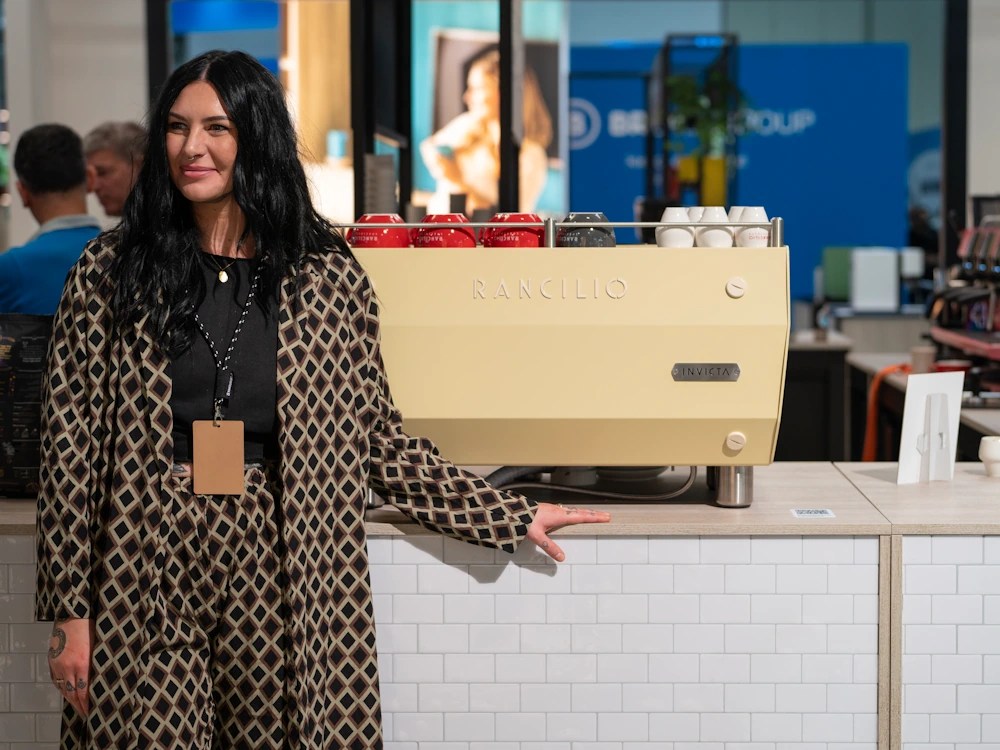
“The margins in specialty coffee are tight. Competition is intense, large chains are aggressively pricing drinks, and the economic climate makes long-term profitability harder to guarantee,” says Nicole Battefeld-Montgomery, a competition coach and four-time German Barista, Brewers Cup, and Coffee in Good Spirits Champion.
“Global ambassadorships, consulting, education, and digital platforms allow champions to share their expertise without carrying the operational risk of running a roastery or café. It’s not about less ambition, but adapting to a different economic reality.”
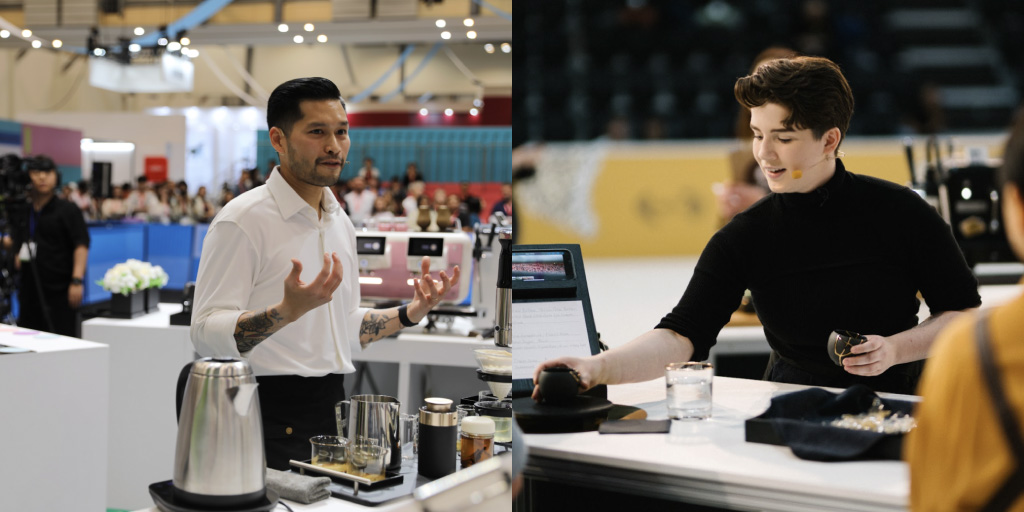
The two most recent World Barista Champions embody this shift well. Mikael Jasin, the 2024 World Barista Champion, wears many hats: he is the Chief of Coffee Innovation at fast-growing Indonesian chain Fore Coffee, and is involved with other Indonesian companies, including So So Good Coffee Company, Omakafé, and CATUR Coffee Co. Most recently, he joined Victoria Arduino as Global Ambassador and partnered with writer Tigger Chaturabul to publish his first book, Bloom.
Earlier this year, Faema named 2025 World Barista Champion Jack Simpson as its Global Brand Ambassador. The partnership with Jack, who has been competing for some eight years, includes a world tour with numerous activations at major industry events.


The costs of competing keep rising
Participating in coffee competitions is undoubtedly expensive. Creating a unique, engaging routine now requires thousands of dollars in upfront investment. The coffee alone, becoming more exclusive and rare by the year, can cost up to US$5,300.
“Experience matters. Years of training, travel, coaching, and equipment testing all require investment. And travel costs alone can become a major financial burden,” says Nicole. “The question isn’t whether independent baristas can win; they absolutely can, but whether the current system makes it equally accessible to everyone. That’s something our industry should continue to reflect on.”
While the opportunity to win can elevate a barista’s status, there’s a risk of limited financial return. The 2023 World Barista Champion, Boram Um, received a cash prize of €5,000, along with a trophy and an origin trip. For many competitors – who may spend over US$10,000 on training, equipment access, coffee, and travel – it can be difficult to justify the costs.
“At least at the World level, access to resources and equipment is increasingly required and simultaneously difficult,” says Morgan Eckroth, the 2022 US Barista Champion and content marketing specialist for Onyx Coffee Lab. “I don’t want to say it’s impossible to be competitive at that level as an independent barista, but it’s becoming increasingly more difficult as routines feature more high-end tech and upper echelon coffees that require support to acquire.”
The cost of competing with a high level of success is therefore almost entirely prohibitive without sponsor or employer support. Sponsors can cover the costs of competition coffee, repeated travel, equipment, practice space, and registration fees, but may expect a high return on investment – something that is increasingly difficult for barista champions to deliver.

Building an online brand
Specialty coffee has always valued expertise, but it’s only recently become accessible to the average consumer. Following the pandemic, with many people forced to stay indoors, interest in online coffee content soared.
Barista champions had a new, potentially lucrative opportunity to share their in-depth knowledge on major platforms. James Hoffmann found huge success after starting a YouTube channel in the mid-2010s, establishing himself as the internet’s go-to coffee expert. Today, his channel has over 2.5 million subscribers.
“There is a lot of security and flexibility that comes with establishing and growing your online brand after winning, rather than jumping straight into developing a physical brand,” says Morgan, who has built a substantial following of 8.7 million across TikTok, Instagram, and YouTube as “your friendly interest barista”, becoming a recognised voice in coffee education.
“Focusing on digital content first can provide financial stability and industry visibility while working behind the scenes on other projects that may require longer gestation periods.”
The ability to instantly reach a global audience provides a solid foundation for a career in content creation; however, authenticity and credibility are key to success.
“Content creators are highly visible. Visibility builds engagement, and engagement builds opportunity,” says Nicole. “But the most powerful cases are those who combine a title with strong storytelling. That’s when you can build something truly lasting.”

What does it take to sustain a barista champion career?
The platform and respect that come with a championship title remain the most valuable outcomes, but neither converts automatically into a long-term career. Credibility must translate into brand interest, and barista champions are actively creating this.
“Relevance doesn’t come from the trophy; it comes from what you build with it,” Nicole says.
For barista champions, this makes diversification essential. One ambassadorship deal with a single brand can be a fragile foundation. The most sustainable careers are built on multiple partnerships, varied revenue streams, and a personal brand that endures after the next champion is crowned.
“At a certain point, it becomes less about the trophy and more about personal growth,” Nicole says. “Competing forces you to evolve. It pushes your creativity, palate, and storytelling. Over time, you start competing less to win and more to share ideas: interesting origins, new processing methods, or meaningful collaborations.”
This shift in motivation is a sign that barista champions are maturing as their work and life priorities evolve.
“The most beneficial aspect of competition is personal development, and it’s why so many of us compete again and again,” Morgan explains. “Competition has moulded me into a better and more knowledgeable coffee professional just by simply participating. Learning and pushing yourself under the structure of barista competitions can be of great benefit to your skills and career, even if that work doesn’t lead to a trophy.”

The WBC remains one of the most credible signals of excellence in specialty coffee. But the landscape surrounding it – the economics of competition, the rise of digital platforms, sponsors’ expectations, and the number of voices vying for the industry’s attention – has changed.
Standing out now demands more than a title. It commands a point of view, a consistent presence, and the capacity to keep evolving as the industry shifts.
Enjoyed this? Then read our article on how much innovation and creativity we really see at competitions.
Photo credits: Specialty Coffee Association, Nicole Battefeld-Montgomery, Sinan Muslu
Perfect Daily Grind
Want to read more articles like this? Sign up for our newsletter!
Source link