
Estimated reading time: 6 minutes
Key takeaways
- Remote workers are reshaping coffee shops into informal, low-cost offices, challenging the third-space dynamic.
- Co-working cafés blend quality coffee with dedicated workspace amenities.
- Membership models increase per-head spend and reduce customer friction, helping maintain traditional hospitality.
- The format requires significant investment, limiting its scale for independents.
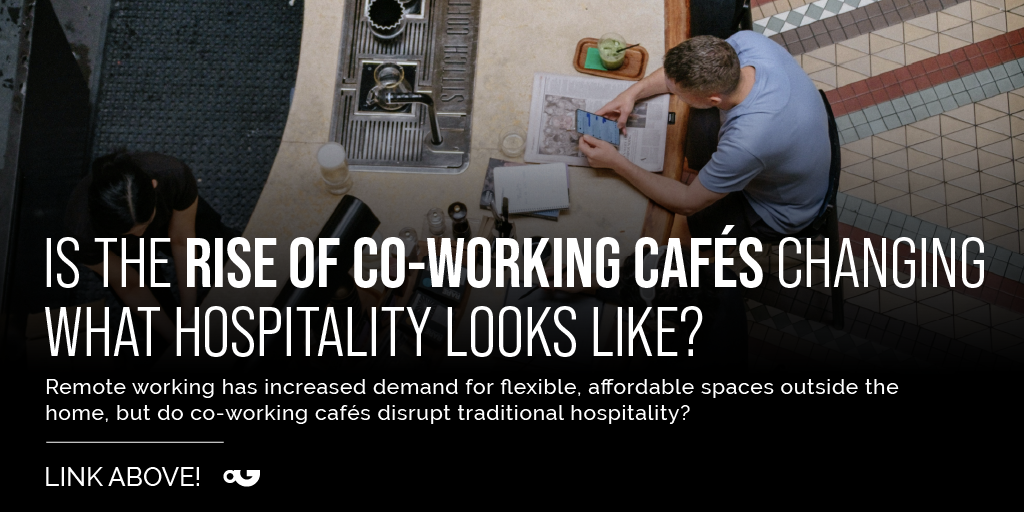
Walk into almost any coffee shop on a weekday morning, and you’re likely to see the same scene: rows of people with laptops open, headphones on, occasionally taking calls in hushed voices.
Digital nomads and remote workers have been on the rise since the pandemic, with some research revealing that in the US alone, digital nomadism increased by 131% from 2019 through 2022.
“Their presence changes the dynamic of a coffee shop,” says James Leigh, a café owner in Preston, UK. “When people stare at screens rather than talking to each other, the space becomes deadly quiet.”
This shift also creates tension for coffee shop owners. Remote workers tend to nurse one drink for several hours, occupying a table that might otherwise turn over two or three times in the same period. According to research from Square, the average remote worker in a café spends significantly less per hour than a traditional customer.
For this reason, laptop restrictions and outright bans will remain a recurring debate in the coffee industry, particularly in smaller independent shops where margins are already tight.
Rather than simply pushing remote workers out, though, a growing number of venues are doing the opposite. They are redesigning their spaces to accommodate them, and in doing so, creating a new category of venue: the co-working café. The aim is to retain traditional hospitality while serving an increasingly mobile workforce.
You may also like our article on whether coffee shops should ban laptops.

Why co-working cafés are on the rise
The template for combining work and leisure wasn’t invented by coffee shops. Companies like WeWork expanded rapidly in major cities during the late 2010s, proving that people would pay a premium for flexible, well-designed workspace that felt more considered than a traditional office.
WeWork and its competitors offered more than a desk: a distinct atmosphere, curated coffee from local roasters, and the social energy of a shared space. The pandemic then accelerated hybrid working models across most industries, and the demand for flexible workspace outside the home and the conventional office grew further.
Coffee quality has been a major part of the success of WeWork and other co-working spaces. Nestlé Professional research found that office workers consistently cite quality coffee as a significant factor in workplace satisfaction and daily productivity.
“Co-working cafés build their offering around it,” James says. “They understand that workers want excellent coffee, so they capitalise on this, but they also know that the business needs to equally prioritise customers looking for a traditional coffee shop experience.”
How do they work?
Co-working café models vary. Some venues operate on a pay-as-you-go basis, designating certain zones as laptop-friendly or restricting laptop use to specific hours to preserve the social and café experience for other customers.
Others sell day passes or monthly memberships that include a set number of drinks, providing a predictable revenue stream while giving remote workers the stability they want. This second model draws the co-working café closer to a traditional shared workspace while retaining the coffee shop atmosphere that makes it more appealing than an office.
Costa Coffee opened dedicated work zones at its West Hampstead, London, location, while in cities like Manchester, venues including Social Refuge and Northern Pour (formerly Foundation Coffee House) have adopted similar approaches, integrating reliable wifi, ample power outlets, and quiet areas for calls alongside their regular café setup.


Do co-working coffee shops diminish café culture?
The business case for co-working cafés is straightforward. They diversify revenue, raise the average spend per customer, set clear expectations for how the space is used, and reduce the friction caused by unspoken rules about how long someone can sit with a single drink.
Done well, they can also preserve the “third place” atmosphere that draws people to coffee shops in the first place. “The space feels purposeful rather than awkward,” James says.
The cultural question is harder to answer. Coffee shops have historically been places of conversation, spontaneity, and community. Formalising them as workspaces, with designated zones and membership tiers, changes their character. There is a reasonable argument that co-working cafés serve a different function from traditional cafés, even though both serve coffee to the public.
It’s also worth noting that the model requires real investment. Operators need space, reliable infrastructure, and staff who understand both hospitality and the expectations of a working environment. This combination is not accessible to every independent coffee shop, which means co-working cafés are likely to remain a niche format rather than an industry-wide shift.

Co-working cafés aren’t replacing traditional coffee shops, nor offices. They occupy a specific space between the two, serving people who want quality coffee, a decent wifi connection, and low-level social energy.
Whether that space grows or remains a niche will depend partly on how hybrid working evolves in the next few years, and partly on whether the economics work for more operators.
Want to grow your sales? Our marketing agency, PDG Media, specialises in helping coffee businesses grow. Get a free marketing audit today.
Co-working cafés FAQs
What is a co-working café?
A co-working café combines the atmosphere of a coffee shop with workspace amenities such as reliable wifi, power outlets, and quiet areas for calls. Some charge day passes or memberships; others simply designate laptop-friendly zones within the venue.
Why are coffee shops introducing laptop restrictions?
Remote workers typically spend less per hour than traditional customers, which squeezes already tight margins. Laptop restrictions help owners balance the needs of working customers with those of visitors who come purely to socialise or eat, protecting revenue and atmosphere.
Are co-working cafés a threat to traditional café culture?
Not directly. They serve a different purpose and require considerable investment in space and infrastructure, so they suit a specific type of venue. Traditional coffee shops and co-working cafés are more likely to coexist than to compete directly.
Perfect Daily Grind
Want to read more articles like this? Sign up for our newsletter!
Source link