
Estimated reading time: 8 minutes
Key takeaways
- Community drives specialty coffee success beyond product quality alone.
- Cross-industry collaborations attract new audiences and spark fresh ideas.
- Physical spaces create meaningful connections between brands and consumers.
- Enduring brands shape how coffee is experienced collectively.
Around the world, coffee has always been more than just a beverage. It’s a ritual, a reason to gather, and a cultural force that connects people across borders and generations.
“Specialty coffee is genuinely collaborative in a way that most industries aren’t,” says Giada Biondi, Global Communications & Culture Manager at La Marzocco. “Knowledge moves around quickly, standards rise across the board, and everyone benefits.”
As the specialty coffee industry matures, the brands that endure are those that understand that success is built not just on coffee quality, but on relationships and community. For many, this means focusing on collaborations – both within and beyond coffee.
In recent years, roasters have partnered with their competitors to expand into new markets and share the costs of innovation. Meanwhile, equipment brands collaborate with fashion houses and luxury car manufacturers to attract new audiences and build prestigious branding.
“Collaboration forces us to see our own brand through someone else’s eyes, and this is where the most interesting work comes from,” Giada says. “We’re not looking for partners who reflect what we already do, but those who keep us connected to the present without having to abandon what makes us iconically La Marzocco.”
You may also like our article on why roasters continue to collaborate.

Community continues to build specialty coffee
Community has always been at the heart of coffee culture. From the traditional Buna ceremony in Ethiopia to the coffeehouses of 17th-century Europe and specialty coffee shops worldwide today, coffee spaces have always functioned as essential gathering points.
They are places where ideas are exchanged, relationships are formed, and cultures are shared – a key aspect of the “third place”, according to urban sociologist Ray Oldenburg.
This is as true in Addis Ababa as it is in Melbourne, Portland, or Tokyo. The rituals of making and drinking coffee are, at their core, communal acts.
Yet as the specialty coffee industry faces mounting pressures – rising green coffee costs, squeezed margins, and shifting consumer habits – investing in community has never felt more urgent or essential.
For many brands, it’s no longer enough to serve excellent coffee. The businesses that thrive are those that create meaningful spaces and experiences that bring people back, not just for the cup, but for the connection.
Brands like La Marzocco have long embodied this philosophy, weaving community and collaboration into the fabric of their identity. “We have sponsored competitions, hosted training sessions, and cultivated our open-door policy both from the factory and from Accademia del Caffè Espresso, continuing to uphold our hospitality ethos decade after decade,” Giada says.
From 21 to 26 April, La Marzocco is hosting a number of events during the 2026 Milan Design Week, bringing together coffee, design, art, and culture in a celebration that extends beyond product launches.
“Casa La Marzocco, located at the heart of Milan Design Week, is a space dedicated to coffee, design, innovation, and collaboration,” Giada explains. “Visitors can engage with a range of coffee experiences and product showcases that celebrate craftsmanship and contemporary coffee culture.”


Celebrating coffee culture
Both out-of-home and at-home coffee consumption rates are rising in key markets worldwide. The National Coffee Association’s latest 2026 NCDT report states that coffee remains the US’ favourite drink, with 82% of past-day drinkers having coffee prepared at home.
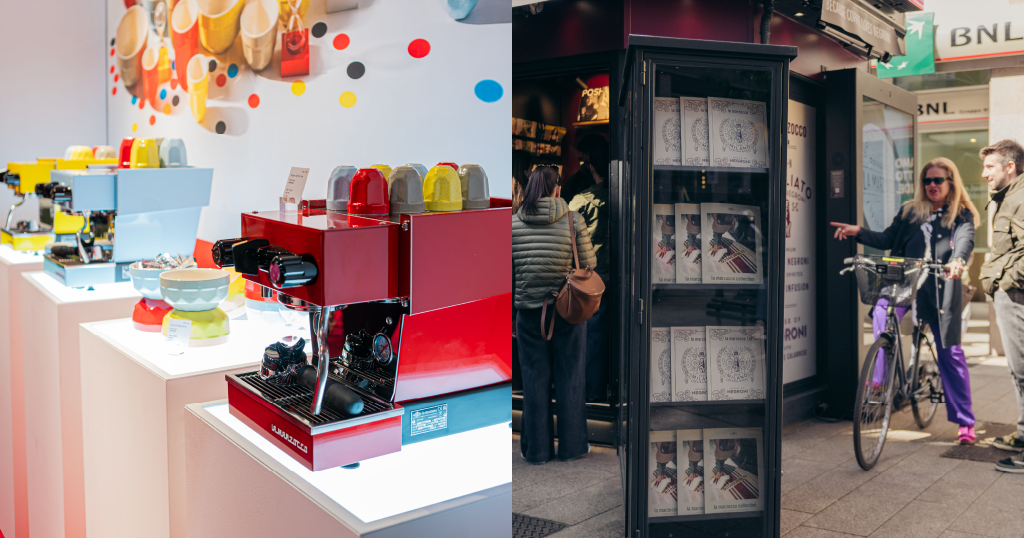
At Milan Design Week, La Marzocco celebrates coffee consumption both at home and on the go. The La Marzocco Home and Modbar ranges will be showcased under one roof, creating a dialogue between home baristas and coffee professionals.
“Modbar redefines the traditional coffee bar by placing technology below the counter, creating an open, minimalist, and more engaging customer experience,” Giada explains. The concept prioritises the connection between the barista and the guest by removing the physical barrier of the machine.
The exhibition also introduces a new chapter for the La Marzocco Home range, with three refined colourways for the Linea Mini and Linea Micra: Crème, Blue, and Brushed Steel.
“The warmer, neutral Crème offers familiarity and pairs with wood and other natural materials. The Blue is more measured and refined, while the Brushed Steel is a return to the original Linea Classic,” Giada shares, reflecting a deeper understanding of how coffee equipment has become integrated into the design of modern homes.
Rounding out the Casa La Marzocco experience, Officine Fratelli Bambi, La Marzocco’s custom workshop based in Florence, is showcasing bespoke espresso machines that speak to the brand’s enduring heritage of craftsmanship and personalisation.
“It’s a reminder that, for all our innovation, La Marzocco remains grounded in the artisanal tradition from which we emerged,” Giada adds.

Collaborating outside of coffee
Community in coffee rarely stays within the industry itself. Some of the most innovative moments in specialty coffee’s recent history have come from its intersections with art, fashion, architecture, and lifestyle – collaborations that bring new audiences into the fold and push coffee culture into unexpected territories.
Influential figures, musicians, and professional athletes have long known this, either collaborating with established coffee brands or building their own.
“Working with a home brand or fashion house teaches us so much about materials, tactility, and consumer interests that a product brief never would,” Giada says. “Collaborations outside of coffee introduce us to an audience who might not know us yet. And if we do this with the right partners, consumers trust that introduction.”
This philosophy is on display during Milan Design Week, where La Marzocco sits at the centre of a network of activations and partnerships that stretch across the city. Its collaboration with POLSPOTTEN, the Dutch brand celebrated for its bold, eclectic approach to tableware design, exemplifies the creativity of collaborations outside of coffee.
Together, they have developed a range of cups, bowls, and accessories inspired by 1930s La Marzocco machines to bridge heritage and contemporary design.

Building community in and out of coffee
In an industry that can sometimes feel fragmented by competition and commercial pressure, commitment to connection is both refreshing and necessary. It’s a reminder that, at its best, coffee has always been about bringing people to the same table.
At this year’s Milan Design Week, La Marzocco collaborated with NEIT to launch Sin Plan, a Mexican-inspired pop-up concept. “It blends coffee, cocktails, and food into a continuous, day-to-night experience, where visitors can pause, connect, and stay a little longer,” says Giada, adding that La Marzocco curates the coffee experience, while Tacos Domingo provides a contemporary take on Mexican gastronomy.
At the intersection of coffee, print culture, and street-level design, the Good Meetup Kiosk with Highsnobiety reimagines the classic newsstand as a cultural gathering point. “Translating the spirit of the magazine into a physical space, the kiosk invites visitors to slow down and engage with life’s simple pleasures: well-crafted coffee, thoughtful storytelling, and curated design,” Giada explains. Visitors can enjoy espresso-based drinks from La Marzocco alongside Highsnobiety’s latest issue and exclusive products – offering a moment of pause amid one of the design world’s busiest weeks.
What else is happening at Milan Design Week?
Additional activations at the Gaggenau residency at Villa Necchi Campiglio and Balay with Monocle Magazine further extend La Marzocco’s presence across Milan, each bringing a distinct cultural lens to the coffee experience.
Threaded throughout these activations is Coffee PortrAIts, developed by Accademia del Caffè Espresso. “It’s an immersive exhibition and tasting format that translates the sensory world of coffee into a visual language through artificial intelligence,” Giada shares. “It reinterprets aromas, textures, and flavours as images, turning the intangible into something visible and experiential.”

The most enduring brands in specialty coffee are cultural participants, both in and out of the coffee industry.
By investing in community, fostering collaborations across different markets, and creating spaces where coffee is a starting point, brands like La Marzocco continue to shape not just how we make coffee but also how it’s experienced collectively.
Enjoyed this? Then read our article on how La Marzocco’s collaboration with Porsche shows how prestigious branding works in specialty coffee.
Photo credits: La Marzocco
Perfect Daily Grind
Please note: La Marzocco is a sponsor of Perfect Daily Grind.
Want to read more articles like this? Sign up for our newsletter!
Source link