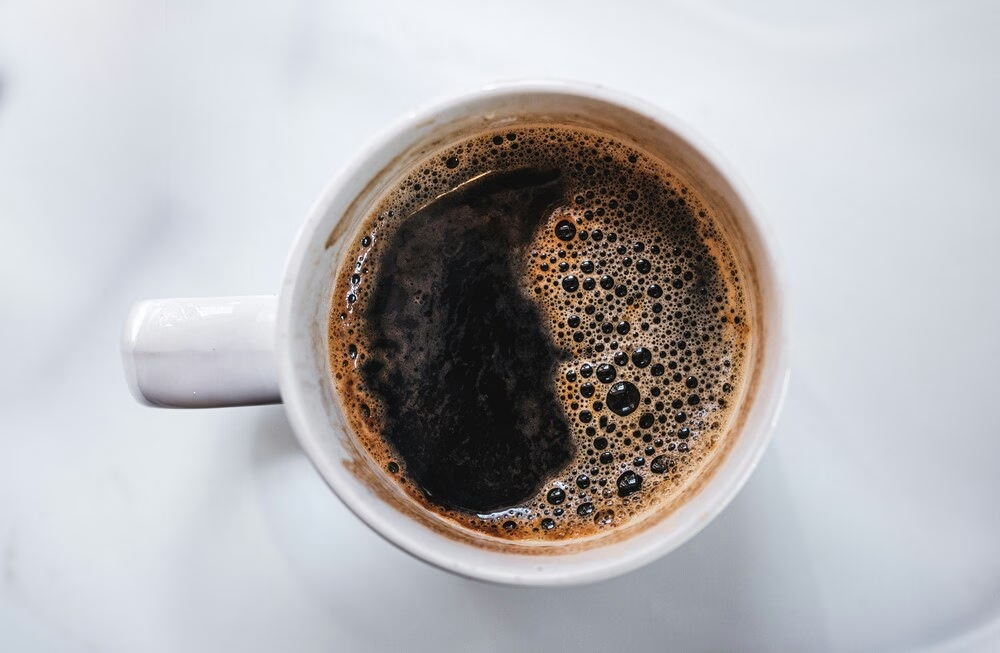
A cupping session with Kivu Noir in Kigali, Rwanda, reveals how culture + memory impact our experience of coffee.
BY TIDENEK HAILESELASSIE
BARISTA MAGAZINE ONLINE
Featured photo by Alfred Kenneally
I walked into the cupping session at Kivu Noir (KN) in Kigali, Rwanda, on four hours of sleep and a faint headache. I had deliberately skipped my first coffee of the day to better soak up the caffeine ahead.
By the end of the session, though, I was buzzing—not only from the coffee I wasn’t spitting out, but from the infectious energy of the staff leading the tasting.

We began with a sensory identification game. Presented with different scents—some vegetal (cucumber), some animal (butter), and some I assumed would be obvious (roasted coffee)—I was asked to match each one to a list. To my surprise, certain scents escaped me. Why couldn’t I identify butter or roasted coffee, synonymous as they were with my Ethiopian upbringing?
The answer, the KN team helped me realize, had to do with culture. The butter my brain recognized was Ethiopian butter, suffused with spices. The coffee I recalled was roasted in a pan over coals during traditional coffee ceremonies. Taste, I came to understand, is shaped as much by memory and culture as by the coffee itself.

As we moved through the tasting, KN café manager Elise Dushimimana and café supervisor Shadia Umugwaneza presented five cupping samples from KN estates across Rwanda. My first task was to smell each roast and identify what I could, before sipping—or “slurping”—each coffee.
My tasting notes from this part of the session are curious and searching:
- dark chocolate, liquor, bourbon
- something sweet and strong, licorice
- something sweet and subtle, cherries
Instead of correcting my associations, Elise and Shadia spoke about the subjectivity of taste—how one person might detect a note another misses simply because they’ve had different experiences in life.

“Asia has fruits I’ve never tasted; Rwanda has fruits someone from the U.S. may never have tried,” Elise explains. “I know someone who identified apricot in a coffee because the first woman he kissed wore an apricot lipstick. There is no ‘wrong’ way to taste coffee.”
“The coffee is the same but culture influences how people describe it,” agrees Shadia, adding, “Travel can expose you to new aromas and foods, expanding your sensory memory and giving you more flavor references.”
Initially, I hypothesized that coffee tasting—in particular, cupping—was probably an elite pursuit, requiring time, money, expertise, and access to travel and varied eating. And to some extent, that’s true. Developing a palate requires time, disposable income, and exposure to experiences often shaped by class.
But a few moments re-framed that theory for me and made me think about how tasting might also be accessible to the average person who simply wants to drink their coffee more mindfully.
The first moment came after the tasting, when I was describing the session to my aunt and mentioned slurping—the method we used to taste, often recommended for getting maximum flavor out of the coffee. The technique is exactly what it sounds like: drawing the coffee loudly from a spoon so it sprays across the tongue and sends aromas through the nose, which plays an outsized role in how we perceive flavor.
My aunt had a sudden realization. “Our elders used to do this, and we made fun of them for it,” she said. “It sounds like they knew what they were doing.” Instinctively, many Ethiopians have long known how to savor their coffee.

When I later asked the KN team how they trained their palates, they mentioned several certifications and years of experience. But Elise emphasized something equally important: He makes a daily practice of truly tasting and smelling whatever is in front of him. Shadia echoed this approach, connecting the cloves in her cooking, the cucumbers in her salad, and the lemon in her coffee.
“People might not be able to pick up yuzu or apricot in the coffee,” Elise says, “but they might taste orange because they grew up with an orange tree in their garden—and that’s not wrong. What matters most is that the coffee tastes good and leaves you with a good feeling.”
Coffee tasting may be influenced by culture and class, but at the end of the day it is equally about savoring the cup in front of you and exercising the same muscle you use to notice the sun on your neck, the breeze at your back, or the sticky-sweet smell of honey—mindfulness.
ABOUT THE AUTHOR
Tidenek Haileselassie (she/her) is a writer based in Addis Ababa, Ethiopia, who explores her curiosities through food, coffee, travel, and culture. Her work has appeared in Sprudge, Medium, and Reed Magazine. When she’s not writing, she’s likely eating, ambling about town, or with friends and family.

Subscribe and More!
As always, you can read Barista Magazine in paper by subscribing or ordering an issue.
Support Barista Magazine with a Membership.
Signup for our weekly newsletter.
Read the February + March 2026 Issue for free with our digital edition.
For free access to more than five years’ worth of issues, visit our digital edition archives here.
Source link