
Estimated reading time: 7 minutes
Key takeaways
- Thailand’s coffee market is now worth 65 billion Thai baht.
- Consumption has nearly doubled, from 180 to over 340 cups per person.
- Almost half of Thai people drink coffee on a daily basis.
- Most of the country’s arabica supplies domestic demand, supporting the growth of specialty coffee consumption.
Thailand currently ranks as the world’s 20th-largest coffee producer, down from the top 15 a decade ago. The country grows mainly robusta, though arabica production is growing, highlighting a sharper focus on quality.
Domestic demand consistently outpaces the country’s supply, which is why the majority of Thailand’s speciality coffee stays within the country. But Thai drinking habits weren’t always coffee-centric. For much of the country’s history, people consumed herbal drinks, then tea, before coffee entered the picture.
“In Thailand, people traditionally consumed herbal drinks for different purposes,” says Jane Kawinnart Veraworawet, co-founder of Fika & Co. and a two-time Thai Barista Champion. “Bael fruit tea was used to cool the body, and gotu kola juice was believed to help reduce inflammation.
“Later on, influences from China and neighbouring countries introduced tea into Thai culture, and tea drinking became more common,” she adds. “After that, coffee culture started to emerge, especially through traditional street coffee carts. That’s essentially how coffee culture began in Thailand.”
You may also like our article on how Indonesia’s specialty coffee market is thriving.

A history of coffee in Thailand
Although arabica plants were first introduced to the country in 1849, Thailand’s shift to commercial coffee production was much more recent. In the 1970s, King Bhumibol Adulyadej launched a project to give farmers a viable alternative to opium cultivation, and by 1976, the country had begun exporting coffee. Within a few decades, Thailand had grown into a top 20 coffee-producing nation.
While the country grows mostly robusta, there has been a recent shift towards arabica. Most of Thailand’s high-quality arabica comes from the northern regions of Chiang Mai and Chiang Rai, with Chumphon and Surat Thani in the south also contributing significant volumes.
Farmers work with varieties such as Typica, Catuai, Bourbon, and local cross-varietals, often shade-grown or intercropped to support yields and quality. Processing methods range from washed and natural to anaerobic and yeast fermentation.
The country’s first Cup of Excellence competition and auction also took place in 2022, with the highest-scoring lot reaching 91.13 points and a top bid of US$73.30. By the 2025 CoE competition, the top 15 coffees had scored 88 points or above, a clear sign of sustained quality across the country’s farms.
Growing consumption means retaining value
Limited production volumes, export constraints, and a maturing domestic market mean most specialty-grade coffee stays inside Thailand. According to the country’s Ministry of Commerce, coffee consumption has significantly increased, from an average of 180 cups per person per year to over 340 cups, with the domestic market value soaring to 65 billion Thai baht in 2025.
“As the local market matures, more roasters and consumers are willing to pay premium prices for high-quality Thai beans, making it less necessary for producers to export,” explains Kittipop Eangchoun, the 2025 Thai Barista Champion. “Farmers often prioritise stable relationships with local buyers who offer consistent pricing and direct collaboration, rather than navigating the complexities of international export markets.”
Despite the constraints, international roasters manage to source Thai coffee. UK roasters such as Climpson and Sons and Ozone Coffee have built personal relationships with farmers and exporters over the years. This Side Up Coffee, a trader that has worked with Chiang Rai’s Beanspire Coffee since 2016, has also consistently brought Thai speciality coffee to European buyers over the last decade.


Café culture explodes in Thailand
As in other Southeast Asian markets, both local and international café chains opened in Thailand during the 1990s. Starbucks arrived in 1998, and with it came a sharp rise in both convenience and price: a cup of coffee cost roughly three times as much as before.
Today, chains like Café Amazon, All Café, and 7-Eleven are popular among consumers, while local brands including Punthai, Inthanin, True Coffee, Black Canyon, and Chao Doi also hold strong loyalty among Thai consumers.
YouGov research found that almost half of Thai people drink coffee on a daily basis, but tourism has also shaped the country’s specialty coffee market. “International visitors bring diverse expectations and exposure to global coffee standards,” Kittipop explains. “This has encouraged local cafés and roasters to elevate quality, improve service, and experiment with new concepts.
“Cities like Bangkok, Chiang Mai, and Phuket have become hubs for specialty coffee where cafés often serve as cultural spaces that reflect both local identity and global trends.”
The fact that most Thai coffee stays within the country has also created a strong internal ecosystem, fuelling the consumption of specialty coffee. “Roasters, cafés, and consumers are all closely connected to producers, which fosters transparency and storytelling,” Kittipop says. “This local focus allows for better feedback loops between farmers and baristas, helping improve quality over time.”
Honouring local flavours
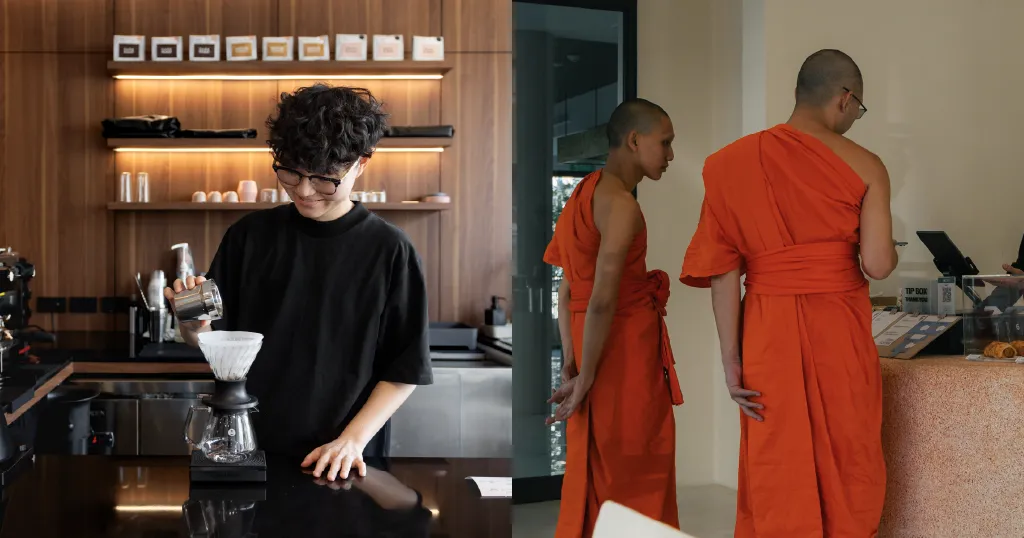
Thailand’s coffee market now spans neighbourhood cafés to high-end specialty bars. International influences are evident, but local flavours, ingredients, and culture-specific drinks remain genuine priorities for coffee businesses.
“Once coffee culture started in Thailand, we gradually adapted and developed our own styles and menus,” Jane explains. “One well-known example is Es Yen, Thai-style iced coffee, which is strong, sweet, and creamy compared to other coffee drinks.”
Thailand’s hot climate has also pushed cold and ready-to-drink coffee into the mainstream, but café culture remains the central force behind the market’s growth. “Many consumers still prefer going to cafés to explore new coffee experiences, whether it’s visiting their favourite shops or trying newly opened ones,” says Jane. “People are increasingly interested in discovering different flavours and brewing methods.”

What’s next?
Thailand’s specialty coffee market shows no sign of slowing. Government data reports that 415 new coffee-related businesses were registered between January and June 2025, marking an 8.92% year-on-year increase. All were categorised as small enterprises, with over 33% based in Bangkok, reflecting the city’s status as a major coffee hub.
Events such as WoC Bangkok, Thailand Coffee Fest, and THAIFEX HOREC Asia are also drawing more attention to the region. Thai coffee brands are expanding internationally too, partly because Southeast Asian cuisine has built a reputation for distinctive flavour profiles in global markets.
At the farm level, meanwhile, the level of innovation is clear. “Over the past decade, there has been a clear shift among Thai coffee farmers toward producing specialty-grade coffee,” says Kittipop. “Many producers are investing in better processing methods, experimenting with fermentation techniques, and focusing on varieties that can achieve higher cup scores.”
Addressing climate changes
Jane agrees and points to the last three to five years as a period of significant change. Farmers are placing far greater emphasis on quality, though climate change is creating real pressure.
“New solutions are being developed to address these challenges. There is increasing collaboration with the government to improve coffee varieties that can perform well under the specific conditions of each growing region in Thailand,” she says.
“Recently, I visited a coffee farm, where they were experimenting with the Batian variety. It showed promising results in terms of higher yield,” she adds. “There are also new varieties being explored, such as Syrina, which offer both good productivity and desirable flavour profiles.”

Thai specialty coffee is flourishing, taking hold in cities throughout the country. With the booming local market, continued international interest and innovative coffee producers, the future looks strong for the country’s coffee market.
Want to grow your sales? Our marketing agency, PDG Media, specialises in helping coffee businesses grow. Get a free marketing audit today.
Photo credits: Fika & Co.
Perfect Daily Grind
Want to read more articles like this? Sign up for our newsletter!
Source link