Key takeaways
- Indonesia’s coffee consumption has tripled since the pandemic.
- Affordable domestic chains are bridging street stalls and premium coffee.
- Specialty coffee culture is spreading beyond Jakarta to major cities.
- Indonesian coffee formats are gaining traction in international markets.
Indonesia, currently ranked the world’s fifth-largest coffee producer with plans to surpass Vietnam, is drinking more coffee. Its consumption has tripled since before the pandemic, making Indonesia the world’s fifth-largest coffee consumer.
Historically, much of the coffee Indonesians drank was far from specialty-grade. Lower-quality robusta was typically roasted dark to mask overly bitter flavours. Sweeteners, condensed milk, sugar, and spices were common additions, particularly in traditional kopitiam cafés, where these drinks remain popular today.
The second wave of coffee arrived in Indonesia in the early 2000s, and taste preferences began to shift. Large international chains introduced consumers to espresso-based drinks, but initially, a single cup often cost more than 30% of the median daily income.
With Indonesia posting its fastest economic growth in the last three years, however, demand for higher-quality coffee is rising rapidly. Domestic chains have bridged the gap between street stalls and premium brands, offering better-quality coffee at accessible prices. Kopi Kenangan, founded in 2017 with the concept of “third-wave coffee taste at second-wave prices,” had expanded to approximately 900 stores nationwide by early 2025.
“With the new wave of specialty coffee and Indonesia’s economic growth, more consumers, especially younger generations, started to embrace coffee as a lifestyle, supported by the rise of affordable local coffee brands and modern cafés,” says Kangmin Kim, the Project Manager at Exporum, an event organiser, which organised World of Coffee Jakarta in 2025.
“At the same time, urbanisation, rising incomes, and convenient formats like grab-and-go and ready-to-drink coffee have made coffee an everyday habit rather than an occasional treat.”
You may also like our article on how specialty coffee is taking over in Turkey.

Indonesia has emerged as a coffee powerhouse
Indonesia is one of the world’s most established coffee producers. It grows both arabica and robusta coffee, contributing around 5% of global coffee exports and generating over US$1.5 bn in export revenue.
At current growth rates of around 5% a year, it’s also Asia’s fastest-rising coffee consuming market, projected to reach a potential value of US$12.6bn by 2030.
Its deep-rooted coffee drinking culture established a solid foundation for this explosive growth. “The country also has a high Muslim population, so coffee is the drink of choice for many people,” says Moelyono Soesilo, the founder of PT. Sumber Kurnia Alam, a specialty coffee exporter in Indonesia.
Traditionally, consumption was centered around warungs (small street-side vendors), home gatherings, and kopitiams (local coffee houses that offer food), which typically serve lower-quality coffee. However, as small cafés and domestic chains have proliferated across the country, particularly in major cities, more people have been exposed to higher-quality options.
“Indonesia has one of the highest numbers of cafés and coffee stalls in the world,” Moelyono says. “More started opening following the release of a 2015 film Filosofi Kopi, which follows two friends managing a specialty coffee shop in Jakarta.
“It made the barista profession more appealing to younger generations, and more people started talking about single origin coffee,” he adds. “Around 40% of the population is young, between 20 and 40 years old, and they have higher spending power to buy better coffee.”


Specialty coffee takes root
Jakarta’s specialty scene, in particular, has moved well beyond accessible chain coffee. The capital is now home to internationally recognised cafés, roasters, and baristas that are pushing the boundaries of innovation.
Mikael Jasin, the 2024 World Barista Champion and three-time Indonesia Barista Champion, owns Omakafé in Jakarta, an omakase-style coffee boutique that showcases multi-course specialty coffee experiences.
Jasin is also Chief of Coffee Innovation at Fore Coffee, one of Indonesia’s most successful specialty coffee chains. Fore raised Rp 353.44bn (approximately US$21m) in its initial public offering on the Indonesia Stock Exchange.
Following the listing, Fore launched a new concept store in Panglima Polim, South Jakarta, serving single origin coffee from some of Indonesia’s most renowned growing regions. Central to the outlet is a slow bar, where baristas educate customers on origin, flavour profile, and different brewing methods.
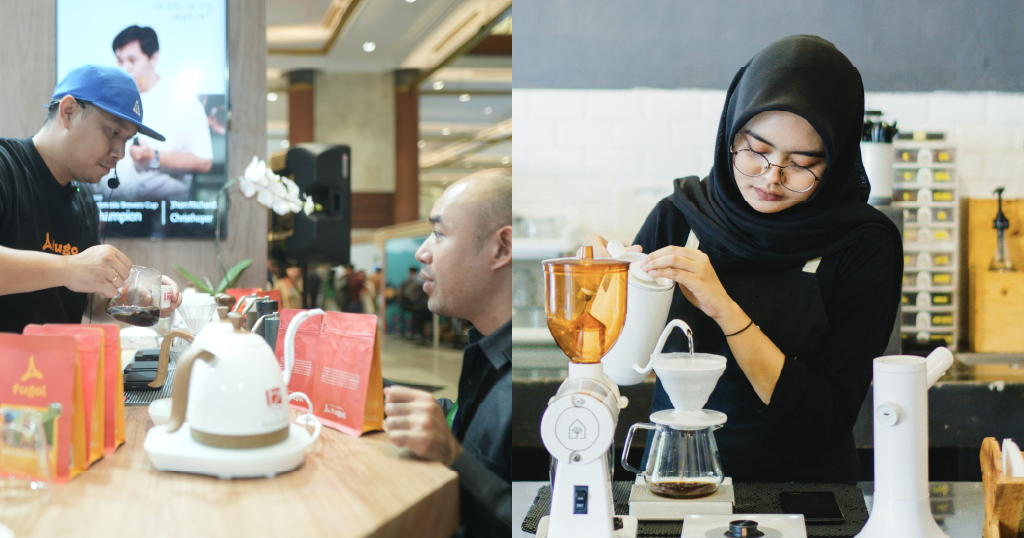
Events are also supporting the growth of Indonesia’s specialty coffee scene. World of Coffee Jakarta took place in May 2025, marking the first time a WoC trade show was held in Indonesia. The next edition will take place in Bangkok, Thailand, from 7 to 9 May 2026.
“What stood out during the event was the strong passion for coffee and the rapid diversification of the specialty coffee scene, with an increasing number of brands each taking a unique approach,” Kangmin says.
Specialty coffee consumption is also growing outside of the capital. More coffee shops and roasters are opening in major cities like Surabaya, Bandung, Medan, and Bali. Specialty chains like Expat. Roasters are expanding rapidly in these areas, introducing homegrown and imported specialty coffee to more people with airport and drive-thru locations.

Growth is expected to continue
According to data from the USDA, Indonesia’s 2024/25 coffee consumption was predicted to rise by 10,000 60kg bags to 4.8 million in total, as both branded and specialty coffee shops and roasters offer consumers more choice than ever before.
“Interestingly, growth is not limited to high-end specialty cafés,” Kangmin says. “Affordable grab-and-go concepts, such as convenience store brands like FamiCafé, are also expanding quickly, showing that Indonesia’s coffee market has significant room to grow in multiple directions.”
Ultimately, this is creating a complex, mature, multi-layered coffee market with room for further diversification.
Indonesia’s success as a coffee-consuming country has been inherent to its identity. Ready-to-drink products, sweet iced drinks, and kiosks have driven growth just as much as third wave coffee shops. The pandemic supercharged these habits, with takeaway and online coffee sales rising by more than 5% as consumers embraced delivery apps, and average orders jumping from one cup to three per transaction.
With reports that the country’s coffee exports have declined in recent years (most notably due to decreases in coffee production), there are signs that more Indonesians are drinking higher-quality homegrown coffee – increasing the potential for value addition.
A growing international influence
As the Indonesian market matures, its influence is also spreading internationally.
Kopi Kenangan was among the first to expand overseas, now operating in India, Australia, Singapore, Malaysia, and the Philippines. Other brands like Fore have opened in Singapore, capitalising on Southeast Asia’s booming coffee market.
More Indonesian-inspired and owned specialty coffee shops are opening in the US, which imports around 12% of Indonesia’s coffee – making it a key market for international reach. Cafés such as Kopiku in San Francisco, DUA DC in Washington D.C., and Hijau in San Jose are showcasing Indonesian coffee culture and moving perceptions beyond the familiar Sumatran flavour profiles and kopi luwak associations.
“Globalisation and social media make it easier for a global audience to discover Southeast Asian food and beverages,” Kangmin says. For specialty coffee shops looking to differentiate, menu items such as kopi susu, pandan lattes, and palm sugar (gula merah) syrups are proving popular.
“By celebrating local flavours, stories, and drinking habits, while adapting specialty coffee to fit everyday lifestyles and price points, Indonesia has shown that authenticity and accessibility can drive broad, sustainable growth,” Kangmin says.
Indonesian chains are beginning to test regional waters, exporting their sweet iced-coffee formats to neighbouring markets where palates align. With global consumer interest in Southeast Asian flavours continuing to grow, those same formats carry potential well beyond Asia.

Indonesia’s specialty coffee is thriving, taking hold in cities beyond Jakarta, while homegrown chains test international markets. Growth spans multiple price points, from convenience store kiosks to omakase coffee experiences.
With a young population, rising incomes, and a coffee-drinking culture that predates specialty, Indonesia has the conditions to sustain this trajectory. The question now is not whether the market will grow, but how far its influence will reach globally.
Enjoyed this? Then read our article on why India’s specialty coffee market shows promise.
Photo credits: Exporum, Specialty Coffee Association
Perfect Daily Grind
Want to read more articles like this? Sign up for our newsletter!
Source link