- Between 2022 and 2024, the EU27’s coffee consumption remained virtually flat, according to the European Coffee Federation.
- China, meanwhile, recently reached 87,505 outlets, overtaking the US as the world’s largest branded coffee shop market.
- Indonesia is on track to surpass Japan as the world’s fifth-largest coffee consumer, and India’s coffee industry is set to double in value by 2030.
- The dynamism of emerging specialty coffee markets can offer more mature roasters fresh insights into navigating an increasingly challenging coffee industry, including community engagement and catering to local taste preferences.
In many countries worldwide, specialty coffee is no longer a niche; it’s a crowded, competitive landscape.
Consumption continues to hit record highs in mature, established markets such as the UK and the US, but growth remains steady relative to emerging markets.
Revenues from India’s coffee shops are rising at nearly twice the pace of their North American counterparts, while Bloomberg recently crowned Shanghai the world’s “most compelling” city for coffee.
Amid volatile coffee prices and economic stagnation, roasters in more mature markets have been forced to take a pragmatic approach. Those in emerging markets, however, still have the capacity to build their brands around enthusiasm and passion – two factors that defined specialty coffee.
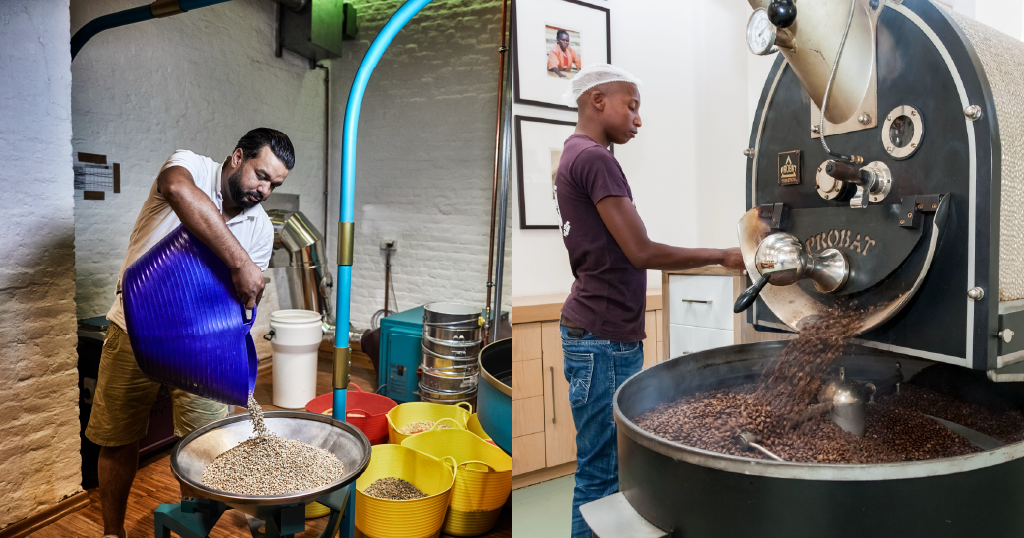
Billy Otieno at African Coffee Roasters and Hisham Abubaker at Dimitri’s Coffee explain how this entrepreneurial spirit can inspire roasters worldwide to revisit their roots.
You may also like our article on why emerging specialty coffee markets show promise amid high prices.

Passion becomes pragmatism in mature specialty coffee markets
The specialty coffee movement emerged in the late 1990s in countries like the US, Australia, and Norway. Spearheaded by passionate individuals who challenged the status quo in commodity coffee, it offered a new approach to doing business.
As with any new venture, novelty was everything. Roasters sought to establish their brands by investing heavily in the “wow” factor of exceptional coffee, traceable from farm to cup. Handbrewed pour overs and light roasts elevated the sense of craftsmanship and educated customers about the vast spectrum of flavours that specialty coffee offered.
Consumption surged in these countries and regions as customers sought higher-quality, sustainable coffee that came with a unique story. As a result, the industry grew at a remarkable rate. In Australia – one of the world’s most popular markets for specialty coffee – the number of cafés exploded between 2005 and 2020, totalling over 28,700 in 2024.
However, in more established markets, these pioneering coffee entrepreneurs have matured. The average age of a café owner in Australia is now reportedly 40, and many around the world have faced challenges, including the 2008 financial crisis, the Covid-19 pandemic, and the historic C market highs in 2025, that have reshaped their businesses.
Many “fun” aspects of early third wave coffee culture have become less of a priority. Instead, roastery and café owners are focusing on operational efficiency, financial literacy, and mutually-beneficial partnerships.
While adopting a more business-like approach is necessary to survive, it risks losing the entrepreneurial spark that first defined the specialty coffee industry.


Emerging markets, meanwhile, thrive on enthusiasm
In emerging markets, the transition from commodity to specialty coffee consumption is still underway. As a result, specialty coffee remains an exciting proposition for consumers.
Meanwhile, consumption in established markets is stalling. The 2024-25 European Coffee Report found that the EU27’s total coffee consumption fell by 0.3% between 2022 and 2024. The decline was most notable in northern European markets, including the Nordic countries that helped pioneer global specialty coffee culture.
This stands in stark contrast to emerging specialty coffee markets, such as India, Indonesia, China, and Saudi Arabia, which are experiencing exponential growth.
By 2030, the value of India’s coffee market is projected to double, and specialty coffee is expected to account for nearly 18% of this growth. Indonesia, meanwhile, has become the world’s fifth-largest coffee consumer, and, according to Deloitte, is on track to overtake Japan – a country with a sophisticated third wave coffee culture.
China has emerged as a global coffee powerhouse. Project Café East Asia 2026 reports that the country’s branded coffee shop market reached 87,505 outlets, becoming the only branded coffee shop market globally to add over 20,000 net new outlets in a calendar year. Chains like Luckin, Cotti, and Lucky Cup, as well as small independent specialty coffee brands, have been key to this rapid growth.
Data from Project Café Middle East 2025 states that Saudi Arabia is the largest branded coffee shop market in the Middle East, reaching 5,130 outlets and accounting for 46% of all stores in the region. Its growth is outpacing many established markets, signalling the Kingdom’s ascent as a major player in global coffee consumption.
This explosive growth demonstrates how creativity and enthusiasm remain powerful competitive tools in emerging markets, serving as a reminder of “what once was” for more mature brands.
“In Kenya, passion for coffee is still raw and personal,” says Billy, a roaster at African Coffee Roasters in Athi River, Kenya. Although only 5% of Kenya’s coffee is consumed locally, the United States Foreign Agriculture Service projects a 6.9% increase in domestic coffee consumption to 62,000 bags in 2025/26.
“The Kenyan coffee scene isn’t just about the cup; it’s the story behind it,” he adds. “When you see someone light up at the sip of a washed SL-28 for the first time, you realise, ‘This is what differentiation really means!’”
Unlike their counterparts in Western markets, industry professionals are less constrained by decades-old third-wave aesthetics or rigid, inherited rules. They are instead actively combining global quality standards with local cultural tastes and entrepreneurial innovation.
“With education and tailoring roasting methods to produce a level of sweetness and bitterness that Jordanians love, the local palate began to accept and prefer specialty coffee,” says Hisham, the founder of Dimitri’s Coffee, the first specialty coffee roaster in Jordan.
Between 1981 and 2018, Jordan’s per capita coffee consumption increased by a staggering 5,800%. Historically favouring Turkish coffee, the country’s specialty coffee culture emerged around 2015, with the opening of Dimitri’s.
“By also incorporating traditional local food and beverages like zaatar fatayer and karkadeh (hibiscus) drinks, consumers have stayed loyal and felt a sense of belonging to the brand,” he adds.

What can mature roasters learn from this?
The challenges of market saturation and rising operational costs in the US, UK, Western Europe, and Australia are substantial for coffee business owners. Yet, the strategies used in emerging markets can offer fresh insights for achieving renewed competitiveness.
One of the critical lessons is to relearn to prioritise cultural relevance, customer experience, and adaptive strategy over an isolated focus on product quality.
Roasters in established markets often prefer a uniform menu of espresso, pour over, batch brew, and classic milk-based drinks, which can sometimes feel disconnected from local culinary identity. Business owners in emerging markets, however, often find success by tapping into local cultural flavour preferences.
“Imagine a café that serves fermented Ruiru 11 alongside moringa tea, or pairs espresso with spiced mahamri,” Billy says. “When specialty coffee speaks the language of the land, it becomes unforgettable for consumers.”
The lower degree of market saturation in these regions also means that quality, brewing skills, and exceptional hospitality remain critical competitive differentiators.
Consumers in emerging markets actively seek education, creating new opportunities for café operators to engage with them. Café experiences are often more immersive and sensory, such as smelling coffee before and after it’s ground and watching baristas prepare coffee at the bar.
This level of engagement is also reflected in the café’s active role as a “third space”: a welcoming hub for socialising, working, and community building. Human interaction is a key part of the experience; customers feel like they are participating, rather than simply receiving a product.
In the Middle East, the focus on the immersive coffee experience is essential, says Hisham.
“Although speed is valued, the local community is more relaxed regarding time, allowing for a different type of café experience,” he tells me. “In Jordan, we focus more on having a nice atmosphere for people to enjoy studying, working, and socialising, not just getting their coffee.”
For more established roasters, this could mean reclaiming “traditional” hospitality by slowing down key service interactions when possible, moving away from automation where feasible, and re-engaging the senses. In turn, they can replicate the enthusiasm that once attracted consumers in these markets.
Coffee shop and roastery operators in emerging markets typically serve a highly diverse customer base, from local students and working professionals to tourists. This requires a more agile and mindful approach to pricing and product diversity.
Successfully balancing affordably priced blends with ultra-premium micro lots ensures both profitability and accessibility. Serving multiple economic segments simultaneously contrasts with the often premium-only model now standard in saturated markets.
By adopting this strategic approach, mature roasters can expand their potential customer base and enable their core, high-quality brand to serve as a gateway to specialty coffee for a wider segment of the local community.

The current hyper-competitive environment in mature specialty coffee markets requires revitalising the industry’s founding values of passion and enthusiasm.
By looking to emerging markets– specifically their dedication to cultural relevance, immersive customer experience, and agile strategic focus – established roasters can inject renewed entrepreneurial energy into their operations.
“Stop looking sideways and start looking inwards: What does your local community actually want?” Billy concludes.
Enjoyed this? Then read our article on how women are driving growth in emerging specialty coffee markets.
Perfect Daily Grind
Want to read more articles like this? Sign up for our newsletter!
Source link