Key takeaways
- Busy coffee shops should batch matcha to improve efficiency.
- Batching matcha can also help improve beverage consistency.
- Proper training ensures baristas prepare batched matcha to high standards.
- Hot water flash-chill is often the best method for preserving quality.
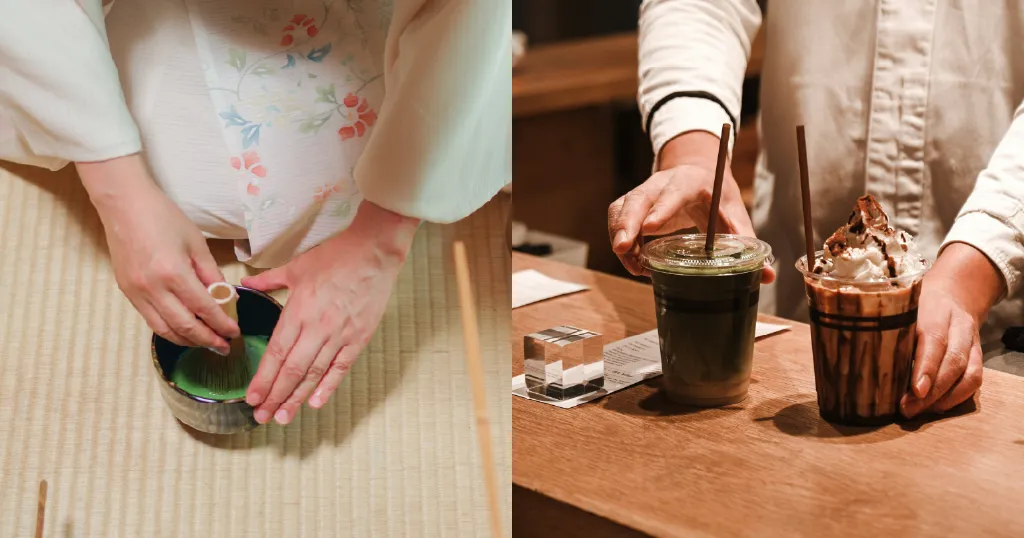
Traditional matcha demands time and attention to detail. For a home brewer, sieving and hand-whisking the vibrant green powder is a careful, sometimes meditative process. But for a barista facing a growing queue, it’s a bottleneck.
“We used to prepare matcha to order, focusing on quality above all else,” says Anna, a barista in Liverpool, UK, who works at several specialty coffee shops across the city. “But as sales have increased rapidly, it’s been almost impossible to keep up with demand without compromising service.”
Research from Square shows that, across the UK, a matcha beverage was sold more than 1.6 million times by more than 2,100 retailers in June and July 2025 alone. Its popularity is undeniable, with major value-focused UK chain Greggs recently launching its first matcha range to enter the premium beverage market.
“Matcha is the third-most ordered beverage at one of the cafés I work at, and it’s also one of the most customised drinks,” Anna explains. “The combination of extensive preparation time and customisation options meant we had to make a decision: impede service and potentially lose customers, or find a way to improve efficiency without sacrificing quality.”
Batching matcha has become the solution for a growing number of busy cafés. Baristas prepare concentrates in advance, allowing them to dispense servings in seconds rather than hand-whisking to order.
“We’ve seen excellent results, but both baristas and customers naturally have concerns about quality and freshness,” says Anna.
You may also like our article on whether matcha is losing its cultural identity.

How do you batch matcha?
There is no single correct way to batch matcha, and the practice may not suit every coffee shop – especially those with slow-service models.
“When quiet, we prepare matcha to order in front of the customer,” Anna says. “It’s a way to draw people in and gives us time to explain more about origin, processing, and different grades of quality.
“However, when it’s busy, we switch to pre-batched matcha. Otherwise, we’re adding an extra ten minutes onto service time.”
The majority of coffee shop customers expect streamlined, smooth service and to receive their order in a timely manner. Research from University College London found that the average customer is prepared to wait in line for 5 minutes and 54 seconds before considering leaving. The study also found that after waiting for five minutes, customer satisfaction can fall from 95% to 85%.
As matcha sales soar, pre-batching has become a necessity rather than a luxury. But ultimately, the right approach depends on your service model, your equipment, and the service you provide.
Many coffee shops use the following methods:
Cold water concentrate
This method blends matcha powder with chilled water, typically at a 2.5:30 water-to-matcha ratio (in grams) to create a concentrate. The result is a sweeter, less bitter flavour profile, but often lacking the complexity of hot-brewed matcha.
“You’ll notice cleaner, brighter vegetal notes with less bitterness, and it pairs better with macadamia or almond milks, where subtle flavours can otherwise get lost,” says Keelan Hartnett, the Managing Director of Flo-Smart, a company specialising in smart beverage dispensing.
Milk blend
This involves blending matcha powder directly with milk to create a ready-to-serve mix that you pour straight over ice. Although it’s the most convenient option, it’s difficult to mix the fine powder with the proteins and fats in cold milk, often resulting in a grainy mouthfeel and an increased likelihood of lumps.
Hot water flash-chill
By using water heated to around 80°C (176°F), you can extract more complex flavours without generating excessive bitterness. You then cool the whisked or blended concentrate rapidly in an ice bath.
“This method results in slightly stronger bitterness, a higher extraction of catechins (a type of antioxidant), and works well with oat milk, which has natural sweetness and body,” Keelan explains.
Because heat accelerates oxidation, batches prepared this way are best consumed the same day.
“We’ve consistently had the best results with the hot water flash-chill method,” Anna tells me. Australian roaster Five Senses also tested different batched matcha preparation methods, and concluded that extracting hot with flash chilling produced the best results.


Best practices for batching matcha
A ratio of 2g of matcha to 30ml of water functions as a “matcha shot,” used in the same way as espresso. This makes it easy to integrate into existing workflows without redesigning menus.
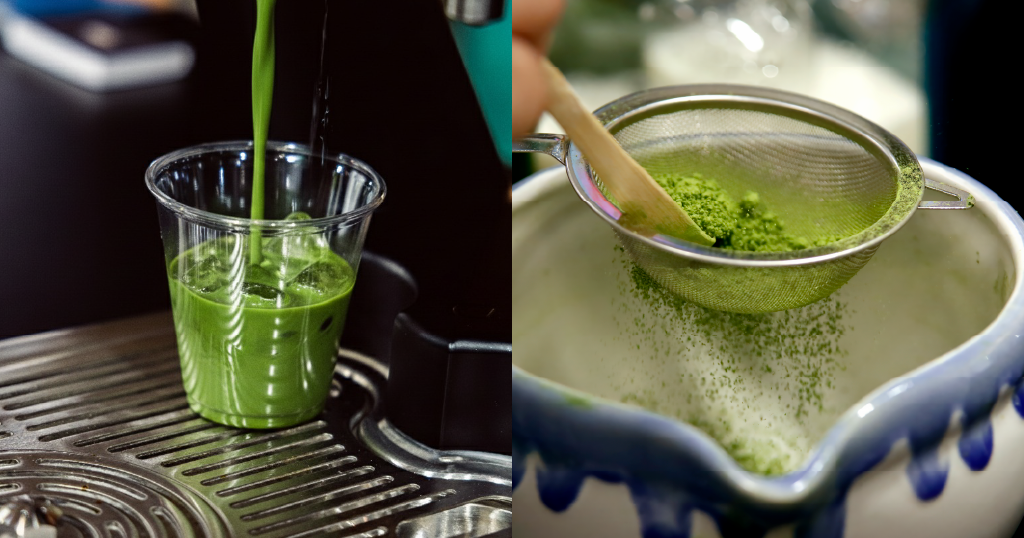
Most cafés need minimal equipment, such as immersion blender running at low speed and a fine-mesh strainer. Pre-sifting and straining before blending reduces lumps and produces a smoother base.
Batched matcha should be stored in air-tight, leak-proof containers. Glass or food-grade plastic both work well, but metal vessels may impede flavour.
“Matcha is very sensitive to oxidation, light, and temperature,” Keelan explains. “In practical café operations, most would batch enough to last up to eight hours or produce one batch in the morning and another for the afternoon rush periods.”
Because matcha is hydrophobic, baristas should also shake batches before each pour to ensure consistent dosing across every drink.
“Even excellent matcha will clump or settle if not properly dispersed,” Keelan explains. “A café using a mid-quality matcha, but excellent mixing technique, will often produce a better drink than one using premium matcha with inconsistent preparation. Operational execution matters as much as ingredient quality.”
Some coffee shops use dispensing machines to further increase efficiency. Flo-Smart’s machines, for example, can dispense batched matcha in under six seconds, helping baristas optimise workflow.

Addressing quality concerns
The division over pre-batched espresso demonstrates that quality and freshness are huge concerns for drinks like matcha and espresso – two highly complex and delicate beverages. But with proper training, Anna insists that you can still uphold the same level of quality.
“Every barista needs to know exactly how much matcha is in each shot and how to prepare drinks to a high standard,” she says. “With best practices in place, you can maintain both quality and freshness, and actually improve the consistency of your matcha drinks.”
It’s also important to know where and when batching is appropriate. This method works for matcha lattes, where milk can mask minor texture loss, and consistency across high volumes is the priority.
However, it should not be used for straight matcha drinks, where the foam texture and suspension, as well as the ritual of the preparation, are integral to the drink itself.

When systems are in place and staff understand the rationale, batching matcha allows cafés to serve more drinks without compromising colour, flavour, or consistency.
The best method is simply the one that fits your operation, your menu, and your customers’ expectations.
Enjoyed this? Then read our article on whether matcha could be the next hojicha.
Photo credits: Flo-Smart
Perfect Daily Grind
Want to read more articles like this? Sign up for our newsletter!
Source link