
It seems like everyone’s talking about sustainability—but are coffee consumers willing to pay more for it?
BY BHAVI PATEL
BARISTA MAGAZINE ONLINE
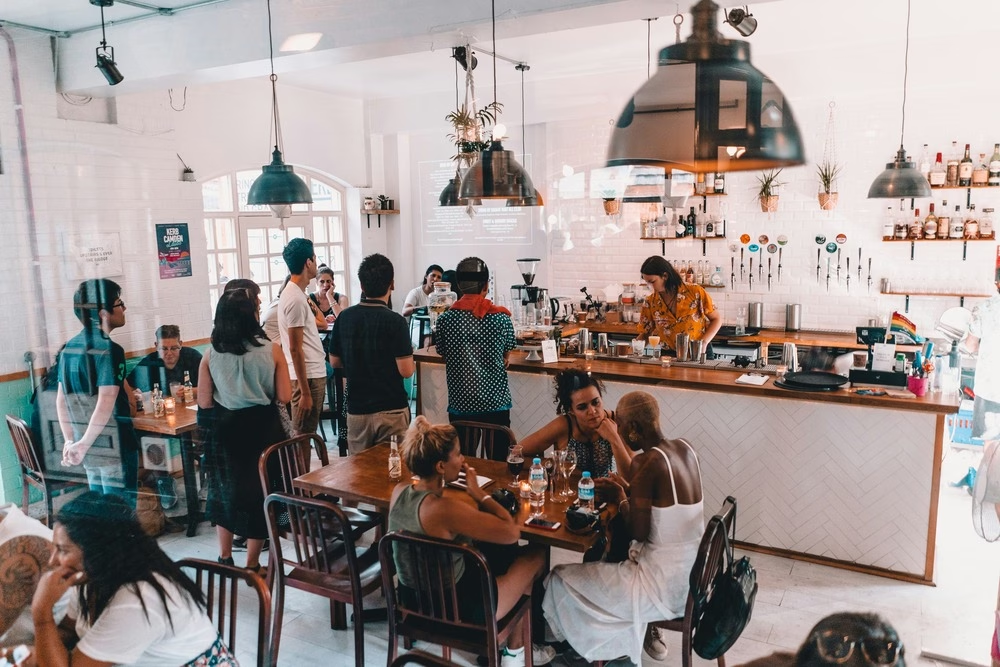
Featured photo by Nicolas J. Leclercq
What to know:
- San Diego-based roaster Lofty Coffee Co. surveyed customers on their consumption habits and whether or not environmental concerns influence them
- Nearly two-thirds of respondents reported that certifications like organic and fairtrade are important to them; half of respondents reported being willing to pay more for sustainably packaged coffee
- Only 12% of respondents reported regularly bringing reusable cups to coffee runs
Coffee has always been personal—a daily comfort and ritual. But increasingly, that choice is carrying a conscience. As climate anxiety grows, a new wave of consumer research is asking a pointed question: Do coffee drinkers actually care enough about the environment to let it impact their purchasing decisions?
The answer, it turns out, is complicated and deeply revealing for everyone in the coffee industry. A recent survey commissioned by San Diego, Calif.’s Lofty Coffee Co. delves into the issue.

Behind the research
Specialty roaster Lofty Coffee Co. polled more than 300 of its own customers to better understand how sustainability shapes coffee purchasing behavior. About 46% of respondents said they drink coffee once a day, and about 37% drink it more than once a day.
The majority of respondents in the survey fall between the ages of 35 and 44, with more than 70% identifying as female, and most hailing from the San Diego and Southern California region. While the sample reflects Lofty’s existing customer base, the findings offer a meaningful pulse check on sustainability-minded consumers more broadly.
Perhaps the most telling headline from the report is just how much the environment weighs on coffee drinkers’ minds, even if they don’t always connect their daily cup to that concern. About two-thirds (66%) of respondents say environmental and climate impacts influence their coffee choices. Of those, the majority (34%) say it is “somewhat important,” 19% say “very important,” and 13% say “extremely important.”

According to the report, when asked specifically about “environmental sustainability” as a purchasing criterion, the numbers climb even higher. A strong majority of consumers (approx. 74%) say it is a priority. That is not a niche preference; that is a mainstream expectation.
For roasters and cafés, this signals something important: Sustainability is a baseline requirement for many modern consumers.
Labels that land—and labels that don’t
The study finds that familiar certification language carries real commercial weight. A whopping 74% of respondents say they are likely or very likely to buy coffee labeled “organic,” “fairtrade,” or “sustainably sourced.” These terms work because they are accessible; consumers understand what they mean and feel empowered to act on them.
But the picture changes dramatically when less common labels enter the frame. When asked about “shade-grown” or “bird-friendly” labels, 50% of respondents said they don’t even know what those terms mean, and an additional 30% said those labels don’t influence their decisions—meaning only 20% of these certifications would motivate a purchase.

This is a critical finding for the value chain. Specialty producers who invest in shade-grown or bird-friendly practices are, in effect, doing the work without getting the credit—not because consumers don’t care, but because they have not been given the vocabulary to care. The opportunity for education is enormous.
Paying more for a cleaner cup
Sustainability commitments cost money, and the question of whether consumers will willingly absorb that cost is one the entire industry is watching carefully. The study finds that the answer is a cautious yes. Half (51%) of the survey’s respondents said they would pay more for sustainably packaged coffee—a slim but meaningful majority that suggests willingness to invest in greener options when the value proposition is clear.
The reusable cup gap
One of the starkest findings of the report reveals a disconnect between stated values and daily habits. Nearly 42% of respondents say they never bring their own cup to a coffee shop, and only about 12% bring one most of the time or every time.

For an industry that talks frequently about waste reduction, this is a call to action, not just for consumers, but for cafés to more actively normalize and incentivize reusable cup culture.
What this means for the coffee industry
The data paints a portrait of consumers who genuinely want to do better, but who are often under-informed and under-supported in doing so. For roasters, the message is clear: Invest in consumer education alongside ethical sourcing. For cafés, that means making sustainability visible, accessible, and easy to act on, at the point of sale and beyond.
And for the broader coffee value chain, from farm to cup, this research underscores that transparency is not optional anymore. Consumers are asking questions, and the brands that answer them honestly will earn not just loyalty, but advocacy.
The conscience of the coffee drinker is awake. Now the industry needs to meet it.
ABOUT THE AUTHOR
Bhavi Patel is a food writer focusing on coffee and tea, and a brand-building specialist with a background in dairy technology and an interest in culinary history and sensory perception of food.

Subscribe and More!
As always, you can get a hard copy of Barista Magazine by subscribing or ordering an issue.
Support Barista Magazine and show your love with a Membership.
Signup for our weekly newsletter.
Join us at Camp Coffee Shop Aug. 10-13 in Napa, California.
Read the April + May 2026 21st Anniversary Issue for free with our digital edition.
For free access to more than six years’ worth of issues, visit our digital edition archives here.
Source link