
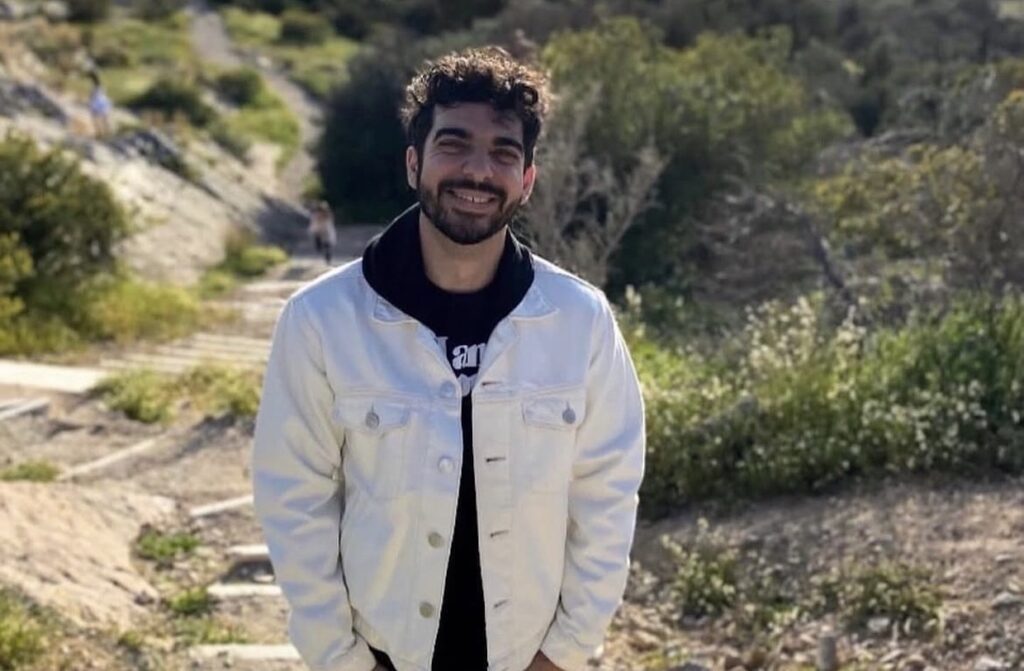
Driven by a desire to connect with more people and pushed in part by the 2008 financial crisis, Kosta Kallivrousis left his father’s electrician business to take a job at a Starbucks outside Tampa.
Kallivrousis, who is now the senior supply chain advisor at Age of Coffee, said his go-to drink at the time was a chocolate chip Frappuccino.
“I remember doing my first tasting with my store manager. We tasted a black cup of coffee and she goes, ‘Now I want you to describe this coffee.’ It was the first time I’d ever been asked this,” Kallivrousis told Daily Coffee News. “I tasted it and said it tasted like dirt. She looked at me and said, ‘earthy, great.’”
Raised in a Greek American family that also owned three diners, Kallivrousis grew up immersed in food and hospitality. Coffee felt like a natural transition.
“But coffee had its own lexicon, its own rhythm,” he said. “You had to be quick, but you also had to know when to slow down and chat with people.”
After moving to Kansas City, Kallivrousis landed his first specialty coffee job at The Roasterie, where he began to take more of an interest in the craft and skills behind coffee, as well as its sensory aspects.
He went on to become a barista trainer, developed an obsession with latte art, competed at Coffee Fest in Chicago and was eventually hired at Parisi Coffee, where he worked alongside 2013 U.S. and World Barista Champion Pete Licata.
“I learned a lot from him — what it means to compete, how to brew coffee, what judges look for and what it means to be a barista,” Kallivrousis said. “Pete was always the first to throw an apron on and head to the back to do dishes. He really set an example.”
As Kallivrousis’ skills deepened, so did his interest in cupping green coffee. A trip to Guatemala became a turning point in his career. A meeting with a broker led to a meeting with producers in Guatemala, where Kallivrousis toured a wet mill, a dry mill, nursery and farm before taking part in a cupping.
What began as a relaxed visit turned serious once the cupping started, underscoring how much depended on the scores and market feedback he was being asked to provide. In that moment, Kallivrousis said, he realized the industry’s idealized story about quality and reward did not match the lived reality of many producers. Kallivrousis described the realization as “shattering,” and it led him to redirect his career.
Not long after that visit, Kallivrousis moved into green coffee sales and supply chain work, becoming a Q Grader and working with green coffee trader Ally Coffee and green coffee platform Algrano.
In his new role at Age of Coffee — a small consultancy and supply chain services provider — Kallivrousis said he is building on those experiences to promote a more equitable and transparent coffee industry, one rooted in direct relationships between producers and roasters.
Here’s more from DCN’s interview with Kosta Kallivrousis…
What about coffee excites you most?
My immediate reaction is being able to talk with people. I find the space I’m in allows me to have really long-form conversations, and really get to know people. That’s the thing that genuinely excites me the most. The other aspect is the fact that, for better or for worse, it is a global phenomenon and so it becomes a bit of a launch pad to be able to study and learn different cultures in a way that creates a sense of familiarity, but also distance at the same time.
What about coffee troubles you most?
The biggest thing that makes it the hardest to create change is this obsession with taste and quality. It’s about control. It’s about the individual controlling the outcomes of so many different lives. One sip can determine the outcome of 20,000 different individuals, and it’s based on their subjective experience. That’s fucking insane.
What would you be doing if not for coffee?
Something academic. It would absolutely be anthropology. There’s an anthropologist, Biao Xiang. He’s the head of a department in Germany, and his research is the most interesting to me. It’s wildly experimental, dealing with concepts like social alienation. What I love most about him is that he really tries to understand and analyze a problem. If you can build around this idea of a common problem, then you can start to deal with social solutions at that point.
Comments? Questions? News to share? Contact DCN’s editors here. For all the latest coffee industry news, subscribe to the DCN newsletter.
Jen Roberts
Jen Roberts is a Paris, France-based writer and avid coffee drinker. She’s currently writing a book on women in coffee.

Source link