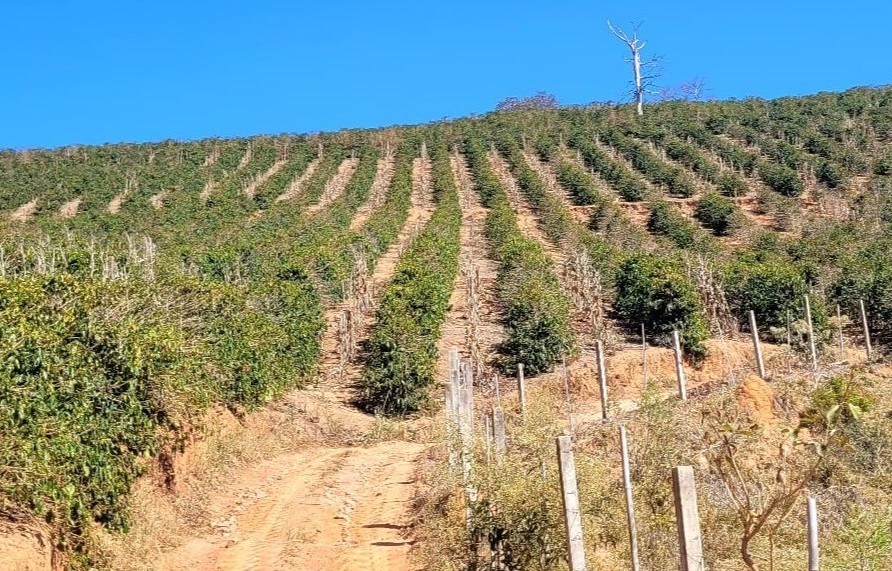
Some other yr has handed for espresso in Brazil, and the 2025 cut is now just about 100% picked, in cupboard and in a position for commercialization.
I’d love to jerk this chance to percentage some observations concerning the 2025 and 2026 vegetation, in keeping with many first-hand visits to espresso disciplines in Minas Gerais and São Paulo, and from hours of conversations with technicians, farmers, researchers, storagefacility house owners and agronomists all the way through the Brazilian coffeelands.
The 2025 Brazil Truncate
Let’s get started with 2025. It’s noteceable to notice that the formation of an arabica cut in Brazil starts almost two years prior to its harvest, and any disruption alongside that two-year advance impacts productiveness.
Backtracking to August/September 2023, there have been sessions of intensive downpour that, mixed with top temperatures, brought on the expansion of plagiotropic and orthotropic branches that might after aid the blossoms anticipated in 2024. Round April and Might of 2024, judging by means of the choice of branches, fruitful nodes, plant condition and leaf protection, it appeared most probably we’d have excellent situations for the flowering that was once prepared to happen between August and October. At that time, I believed we may see a bountiful harvest in 2025.
Sadly, between Might and September of 2024, we confronted a record-breaking drought that significantly affected fruit prepared. Technicians and agronomists estimated that by means of Might, a lot of the prospective was once already misplaced and that 20–25% of the harvest was once compromised.
This occurs since the power reserves maintained by means of espresso crops drain when fueling herbal physiological processes equivalent to leaf and root enlargement, flower and fruit building, pathogen protection and so forth. Underneath rigidity — whether or not climatic or physiological — the plant spends a part of that power stability simply to continue to exist till situations beef up.
In some circumstances, like in 2024, the flowering may also seem intense as a result of below rigidity the plant’s physiological reaction is also “one last massive bloom before dying.” It’s a survival mechanism — a strategy to perpetuate the species. Alternatively, this doesn’t typically translate into upper manufacturing. Low reserves cruel the plant can not maintain such an considerable bloom, and maximum plants fall to the field. That was once a familiar optical in 2024.
From October 2024 to February 2025, alternatively, downpour was once reasonably habitual and common temperatures weren’t too top, in contrast to the new enchanment of January/February 2024. In consequence, the extra end result advanced neatly, and unused branches — liable for sporting the 2026 harvest — grew vigorously.
Between February and March 2025, a juiceless enchanment left key arabica areas with out hail for 20–30 days, trimming the overall grain-filling level and generating lighter, less-dense beans. Surveys nearest steered an extra 5% relief on manage of the 20% possible loss already anticipated — a decrease showed within the stream harvest by means of below-average cherry-to-green turnovers. Many arabica areas required extra seeds than ordinary to fill a typical bag, underscoring the density release.
This snip drought additionally hampered segment enlargement and the bundle of power reserves for 2026. These days, warehouses throughout other areas display smaller shares than ordinary — a truth expected by means of native analysts, despite the fact that nonetheless unexpected for a part of the marketplace.
Balancing Power Reserves
Why am I emphasizing power reserves such a lot? As a result of they’re important for shaping the harvest.
In Brazil’s primary arabica areas, now we have two distinct sessions every yr. From August to March/April, crops develop and collect reserves, due to considerable rains and better temperatures. It’s significance remembering that arabica plays easiest between 21–22°C and as much as 30–31°C. Under or above those thresholds, physiological and photosynthetic processes are much less environment friendly. So when situations are excellent, that’s the while for the espresso tree to develop and get ready for the more difficult months forward.
Between April and August, temperatures and downpour release. Right through this era, the plant slightly grows or shops power. Nonetheless, due to reserves amassed previous, it typically will get via this gentle rigidity length. The disease comes when exterior components build up power expenditure, retirement the plant with a near-empty gasoline tank simply because the wet season starts.
Heading Into 2026
Now let’s communicate concerning the 2026 harvest. Regardless of the demanding situations of the early-year drought, the outlook round Might 2025 was once nonetheless sure, with the prospective to in any case surpass the 2020 harvest.
Alternatively, midyear has been harsh on arabica disciplines. Frost accident some noteceable grounds within the Cerrado of Minas Gerais — now not as terrible as in 2021, however nonetheless with perceptible injury. We’ve additionally evident chilly waves with top humidity in the beginning of the juiceless season, which higher leaf-loss sicknesses. And now, any other extended drought coupled with emerging temperatures is worsening defoliation and draining the power reserves constructed up in early 2025.
Sadly, as I pressure during the arabica areas of Brazil’s two biggest generating states, it’s tough to believe the 2026 cut surpassing 2020.
Climatic demanding situations stay the best barrier to conquer. Many Brazilian manufacturers are neatly acutely aware of applied sciences and control practices that can get better manufacturing resilience — agroforestry programs, drought-tolerant types, boosting park natural topic, inexperienced manures and defend vegetation, irrigation and others.
Over the latter 5 years, I’ve evident huge funding in those approaches. But the while of adoption nonetheless can not hold up with the dimensions and velocity of the condition demanding situations farmers are dealing with.
Writer’s word: Day-to-day Espresso Information does now not interact in backed content material of any type. Any statements or reviews expressed belong only to the authors and don’t essentially mirror the perspectives of Day-to-day Espresso Information or its control.
Feedback? Questions? Information to percentage? Contact DCN’s editors here. For all of the original espresso trade information, subscribe to the DCN newsletter.
Alike Posts
Jonas Ferraresso
Jonas Leme Ferraresso holds an agronomy level from São Paulo Atmosphere College (UNESP). He has labored as a espresso farmer, a espresso agronomist and as an marketing consultant for a number of farms in Brazil.



Source link